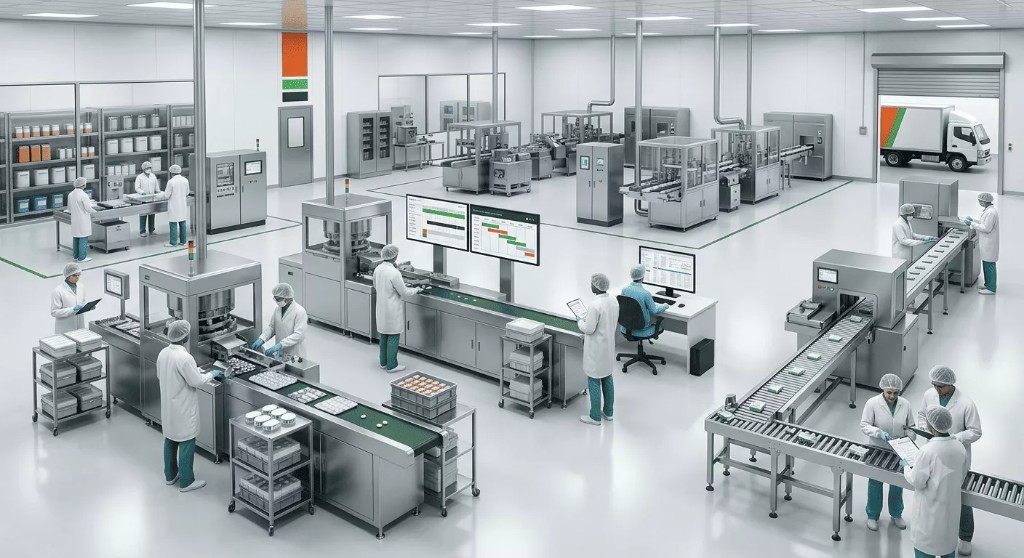
Before 2015, choosing a pharma manufacturing partner used to be a procurement decision. But post COVID-19 era, it's a business decision that follows you for years.
A bad fit shows up as delayed launches, inconsistent batches or compliance headaches you didn't see coming. Knowing how to choose the right pharma manufacturing company in India protects your brand, timelines and reputation with buyers.
Understanding Your Business Needs Before You Choose
- Are you launching your first pharma product or expanding an existing line of pharmaceuticals?
- What dosage forms (tablets, capsules, syrups, injectables) do you need and in what volumes?
- Is this a one-time run or an ongoing supply relationship?
- Your budget, timelines and growth plans should shape the search.
India's pharmaceutical manufacturing market was valued at roughly USD 20.6 billion in 2025, growing at a CAGR of 6.37% through 2034. No wonder, the field of manufacturers is expanding fast, so a clear brief helps you filter noise quickly.
Types of Pharma Manufacturing Partnerships Explained
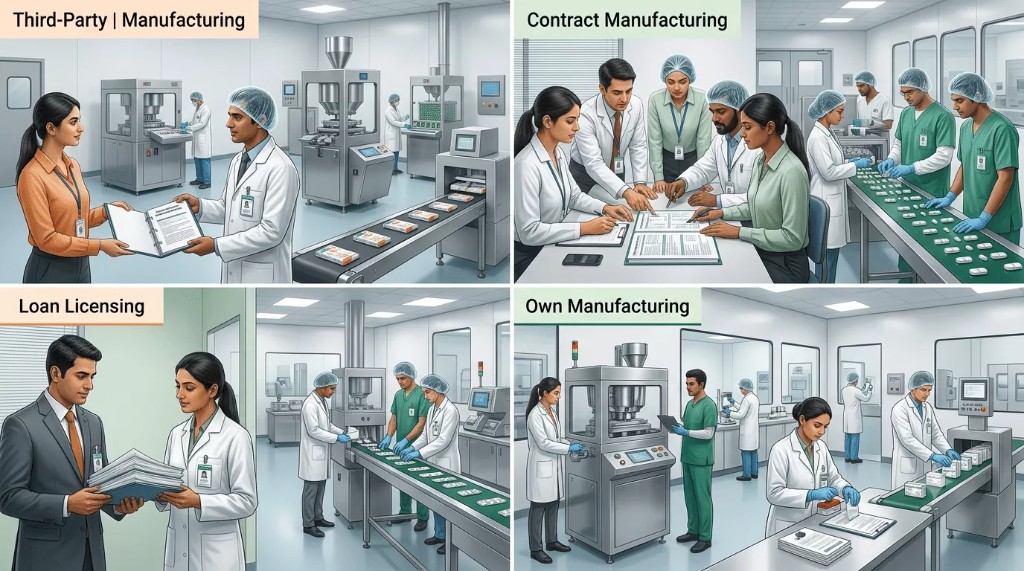
India's pharma manufacturing ecosystem offers several partnership models. Having the knowledge of what to look for in a pharma manufacturing company starts with understanding these structures. Third-party manufacturing is the most common route for emerging brands. Here you supply the formulation requirements and branding, the manufacturer handles production using their own license and facility. It's fast, low-capital and ideal for testing new SKUs.
Contract manufacturing works similarly but often involves a deeper, longer-term relationship, sometimes with dedicated production lines or exclusivity clauses. This model has real momentum. Contract manufacturing accounted for over 53% of India's pharma manufacturing market share in recent years. And analysts expect it to remain the fastest-growing segment as more brands outsource production instead of building their own plants.
Loan licensing is different. You hold your own drug manufacturing license. But "loan" the use of another company's facility to manufacture under it. This suits brands wanting more regulatory ownership without building infrastructure from scratch.
Own manufacturing means building or acquiring your own facility — full control, full capital commitment and full regulatory responsibility. But then, it's the endpoint for established brands. Each model carries different cost structures, control levels and compliance obligations. Thus, the right one depends entirely on where your business stands today.
Now we are sharing in detail what to look for in a pharma manufacturing company:
Matching Manufacturer Type to Your Product and Business Stage
Early-stage brands testing market response usually do best with third-party manufacturing:
- Lower upfront cost
- Faster turnaround
- Easier to switch if something isn't working
Growing brands with proven demand often move toward contract manufacturing for better pricing and priority scheduling. For context, India's contract manufacturing organization (CMO) market is estimated at around USD 29.5 billion in 2026 and forecast to nearly double by 2031. In short, that’s reflecting just how many brands are choosing outsourced production over self-owned plants. Loan licensing suits businesses wanting brand and regulatory control without capital-heavy infrastructure. Own manufacturing makes sense only once volumes and margins justify the investment.
Choosing Right Pharma Manufacturing Company: Certifications and Compliance You Cannot Skip
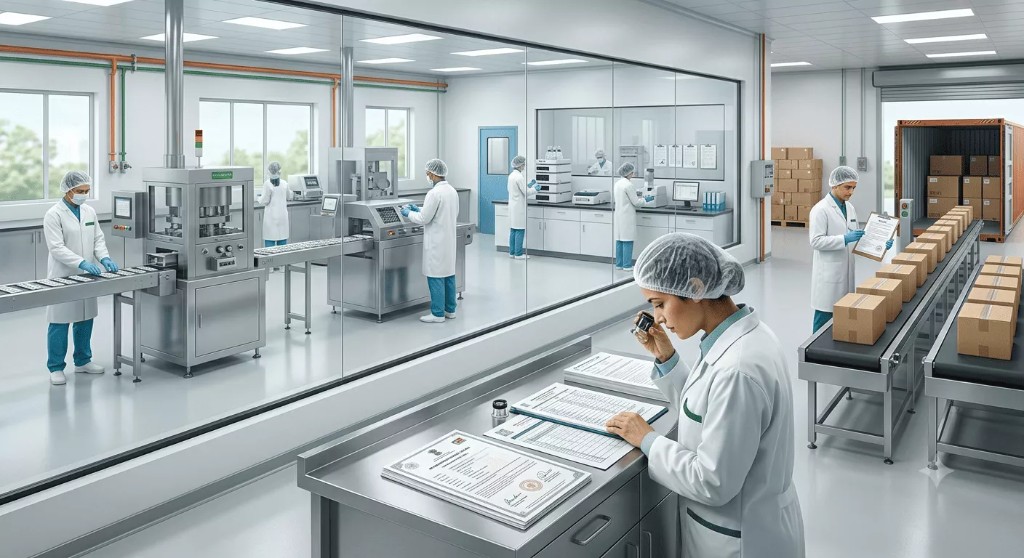
Among the top factors to consider when choosing a pharma manufacturer, this is non-negotiable ground. Any manufacturer you consider must hold a valid drug manufacturing license issued by the state or central licensing authority.
- Look for WHO-GMP certification at minimum. This signals the facility meets internationally recognized benchmarks for hygiene, process control and documentation.
- ISO certifications add another layer of assurance around quality management.
- If you're eyeing export markets, an FDA-approved plant or equivalent clearance becomes essential.
Note that India already supplies 55–60% of UNICEF's global vaccine needs and meets 99% of WHO's DPT vaccine demand. That's proof of how seriously regulatory compliance is enforced here. Skipping this step is how brands end up with recalled batches or blocked shipments.
So next, how to select a pharma manufacturer?
Manufacturing Capacity, Scalability and Turnaround Time
A manufacturer might look perfect on paper and still fail you operationally.
Ask directly about manufacturing capacity: Can they handle your order size comfortably, with headroom for growth?
Scalability matters more than most brands realize; you don't want to outgrow your manufacturer within a year and restart the vetting process.
Turnaround time is equally critical — get clear, written timelines for production and delivery. Ask how delays or raw material shortages are handled.
Larger CDMOs now compress dossier and bioequivalence filing timelines from roughly 36 months down to 18. So ask partners how efficient their process actually is as the key factor to consider when choosing a pharma manufacturer.
Quality Assurance, Documentation and Testing Practices
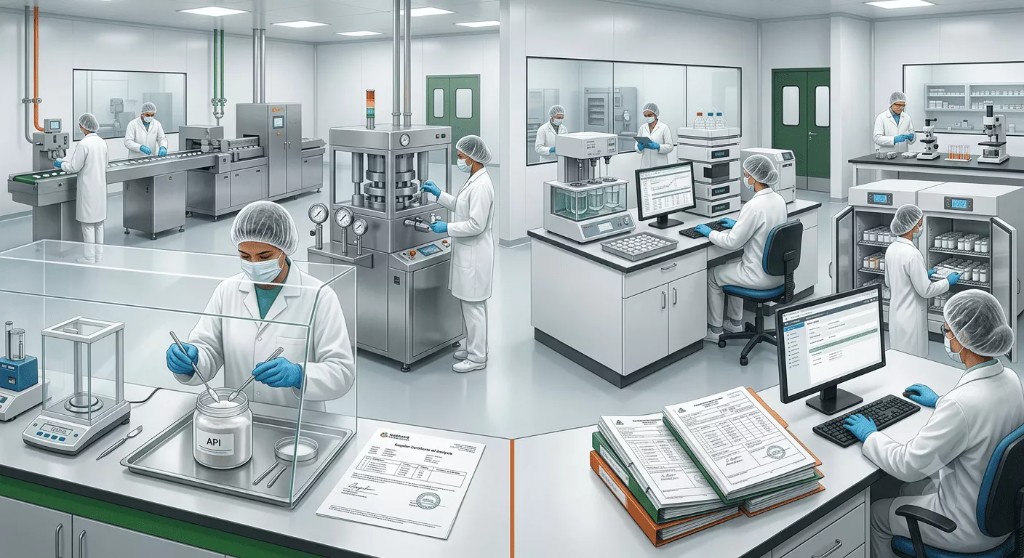
Quality isn't a claim — it's a process you should be able to see.
So as the first step you must ask: How does the manufacturer handle API sourcing? Whether raw materials are tested before use? What in-process and finished-product testing looks like under their quality control standard?
In the second step — request sample batch records, stability data and certificates of analysis. Strong formulation capability and R&D capabilities matter if you're developing new products.
The Right Pharma Manufacturing Company is always the one with organized, audit-ready records. And which are typically the ones who take compliance seriously every day.
Cost, Transparency & Where to Find Pharma Manufacturers in India
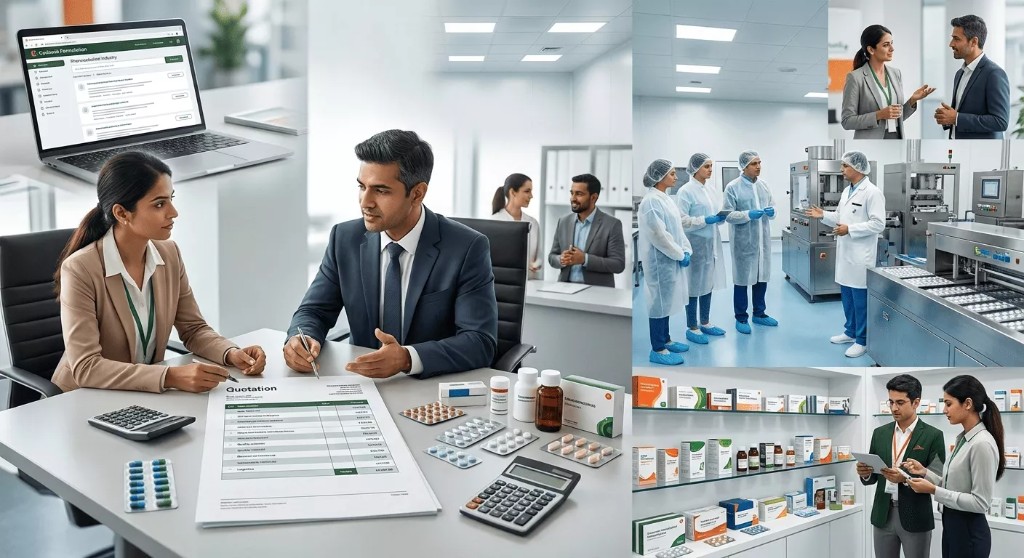
Cost matters, but cost transparency matters more, get itemized quotes covering formulation, packaging, testing and logistics, so there are no surprises later. Reliable manufacturers are found through industry directories, pharma trade exhibitions, referrals from other brand owners and direct facility visits.
Select a pharma manufacturer based on client testimonials, existing brand portfolios and years of industry experience.
Cost transparency beats the lowest quote. An itemized proposal that covers formulation, packaging, testing and logistics is usually a stronger signal than a single lump-sum price.
How Kashmik Formulation Helps You Choose and Onboard the Right Manufacturer
Kashmik Formulation simplifies this entire evaluation process for you. We help you:
- Verify Quality & Compliance: WHO-GMP-compliant manufacturing processes.
- Scale Without Building a Factory: We have a large-scale manufacturing infrastructure with 60,000 sq. ft. facility and capacity of up to 1 crore tablets per day.
- Develop the Right Formulation: R&D support from concept to production.
- Match Your Product Needs: Tablets, capsules, powders, liquids and more.
- Simplify Regulatory & Export Needs: Documentation and compliance support.
- Build a Long-Term Manufacturing Partnership: Quality, supply reliability and customer-focused support. Third-party and contract manufacturing services are offered to businesses in India and abroad.


Making a Confident, Long-Term Manufacturing Decision
The right manufacturing partner isn't just about today's order. Remember, it's about the next three years of your brand's growth. In a market growing this fast, get this decision right once and everything downstream gets easier. If you still have queries on what to look for in a pharma manufacturing company, connect with us.