
India is the world’s third-largest pharma producer by volume. Pharmaceutical exporters in India serve more than 191 countries. Exports reached $30.47 billion in FY 2024-25, up 9.4%.
If you want a share of that trade, we will today show how to export medicines from India. Our article today will cover your queries around licences, documents and the full export process. And this is as per the rules valid after October 2026.
Why India Is a Global Pharma Export Hub
The USA, UK, Brazil, South Africa and France lead the buyer list of medicines from India. Every medicine export process from India begins with some common facts. But the most important of these is that the buyers want proof of quality. Our pharmaceutical exporters in India win on that aspect as we provide the best!
Who Can Export Medicines from India?
Three types of medicine exporters are found in India:
- A manufacturer-exporter – this one makes and ships its own medicines. You need a drug manufacturing licence (Form 25/28).
- A merchant exporter – he buys medicines only from licensed makers and ships.
- A loan licensee – this exporter takes the licence of another pharma company on loan to export medicines.
Step-by-Step Process to Export Medicines from India
Step 1: Get Your IEC and Pharmexcil RCMC
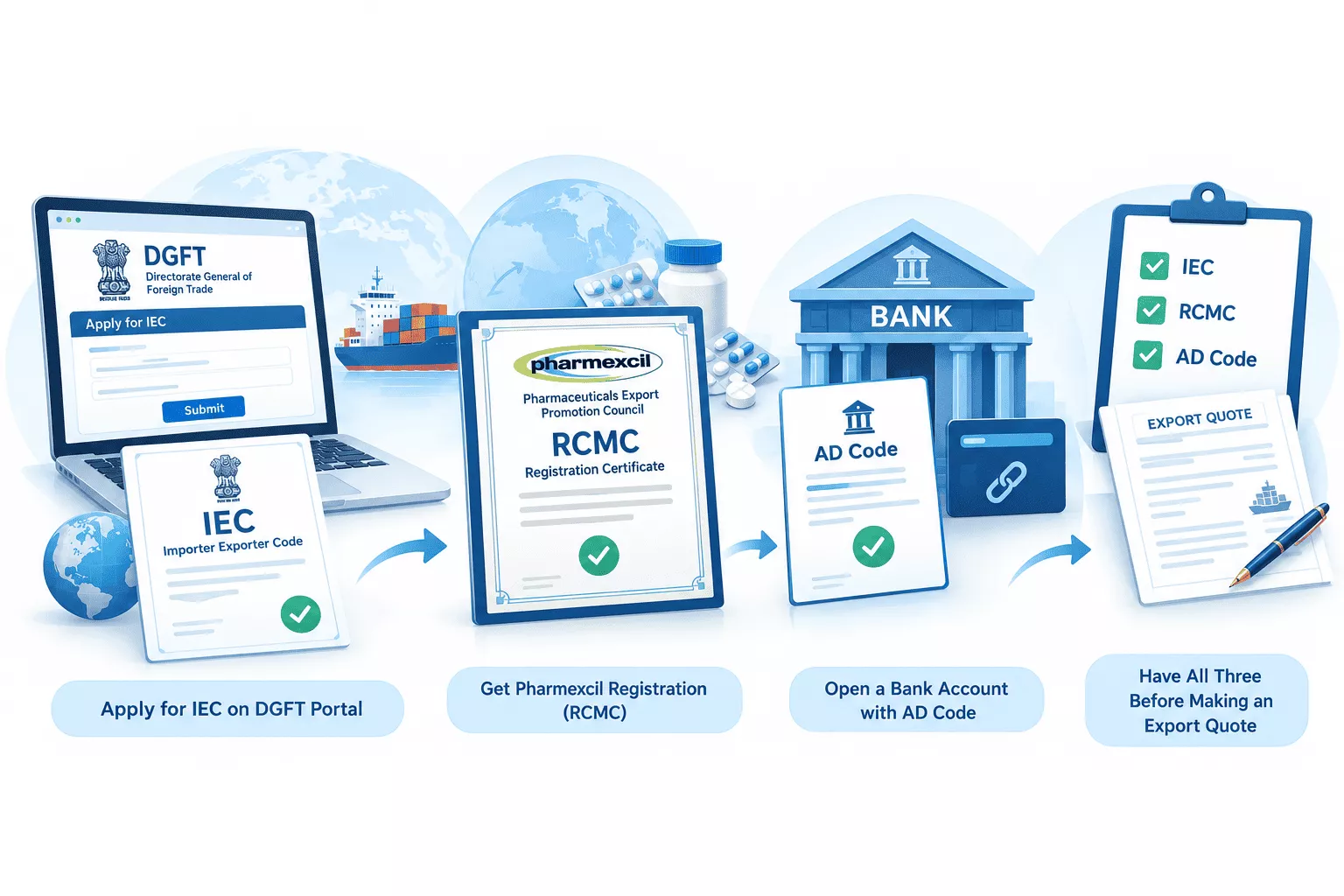
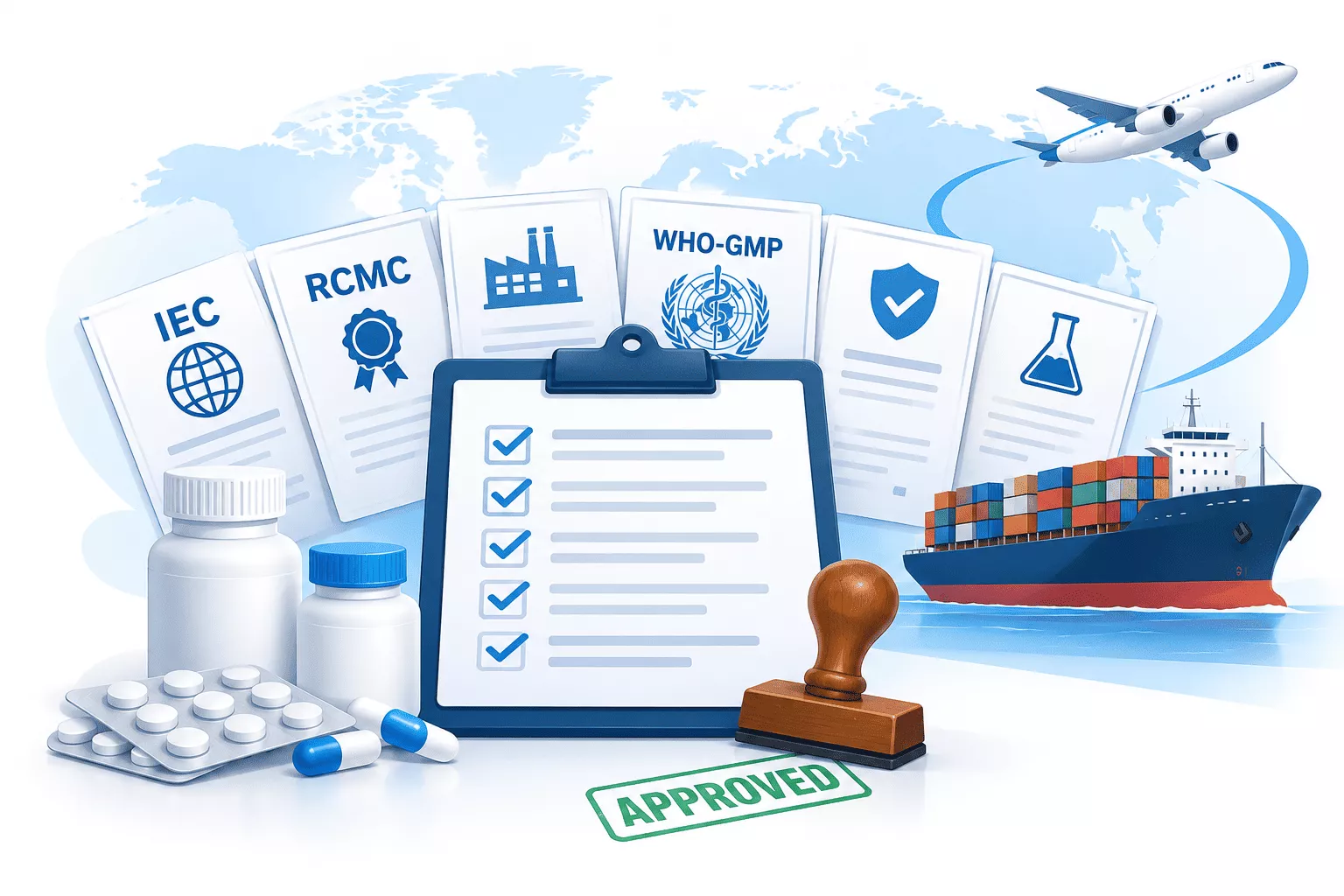
An Importer Exporter Code (IEC) is the basic and foremost requirement for every shipment.
And for that you need to apply on the DGFT portal. You also have to get Pharmexcil registration (RCMC) done. This certifies you as a recognised pharma exporter. After all this is done, you will need a bank account with an AD code. This is for the payee banks and customs to link shipments to payments. Before making an export quote, you will need all these three.
Step 2: Secure Drug Licences and Compliance Certificates
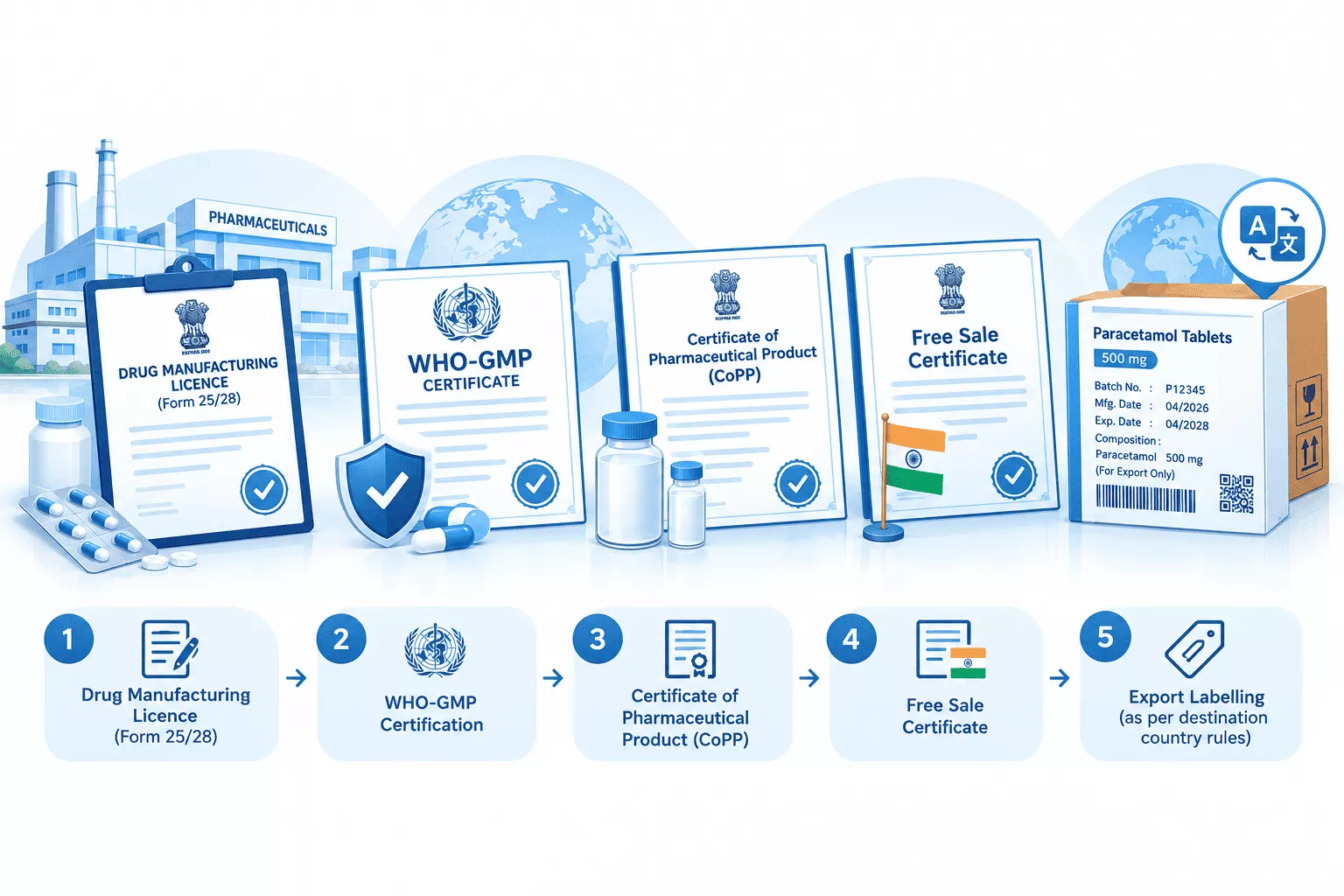
A valid drug manufacturing licence (Form 25/28) is the base to become a medicine exporter.
International buyers also require you to have a WHO-GMP certification.
After you have attained the above two, the next in the chain is procuring the Certificate of Pharmaceutical Product (CoPP). This certification shows the medicine is licensed and made as per GMP standards.
Next is a free sale certificate, which assures that the medicine all set to export is freely sold in India.
Now comes the export labelling, which must carry batch number, dates and composition and match the importing country’s rules.
Step 3: Choose Target Markets and Register Your Products
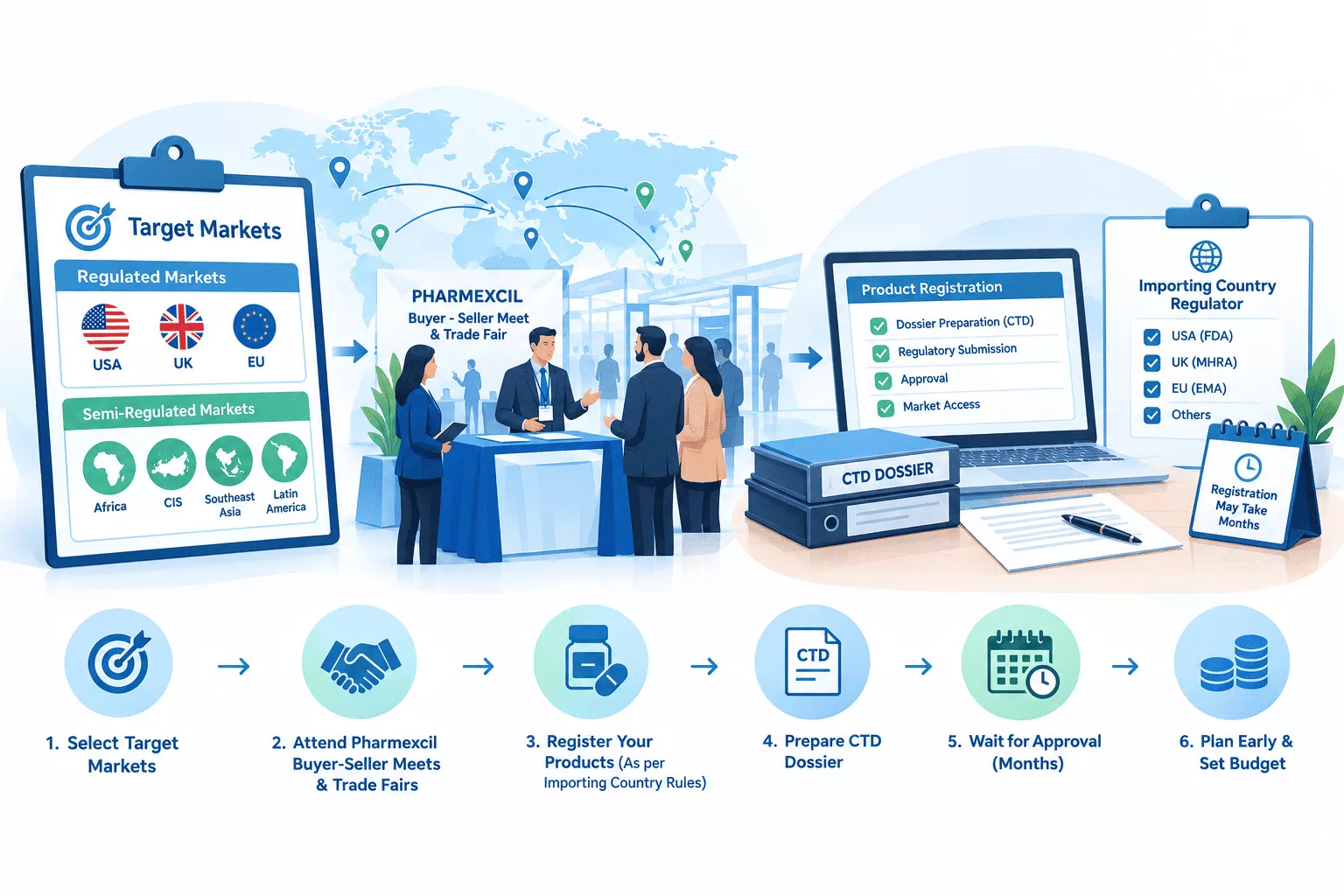
The core step that many miss is to select your markets before you choose your medicines. There are two export markets here:
- Regulated markets – the USA, UK and EU usually fall for strict approvals.
- Semi-regulated markets – Africa, CIS, Southeast Asia and Latin America move faster.
To find out where you fit in, you can meet buyers from both markets at the Pharmexcil buyer-seller meets and trade fairs.
As per what suits you, you then have to register each medicine. This registration is governed by the importing country’s regulator, not India. A CTD dossier is prepared and registration may take months, so be patient. This time varies from nation to nation, so you need to plan early and create a suitable budget too.
Step 4: Check Whether a CDSCO Export NOC Applies
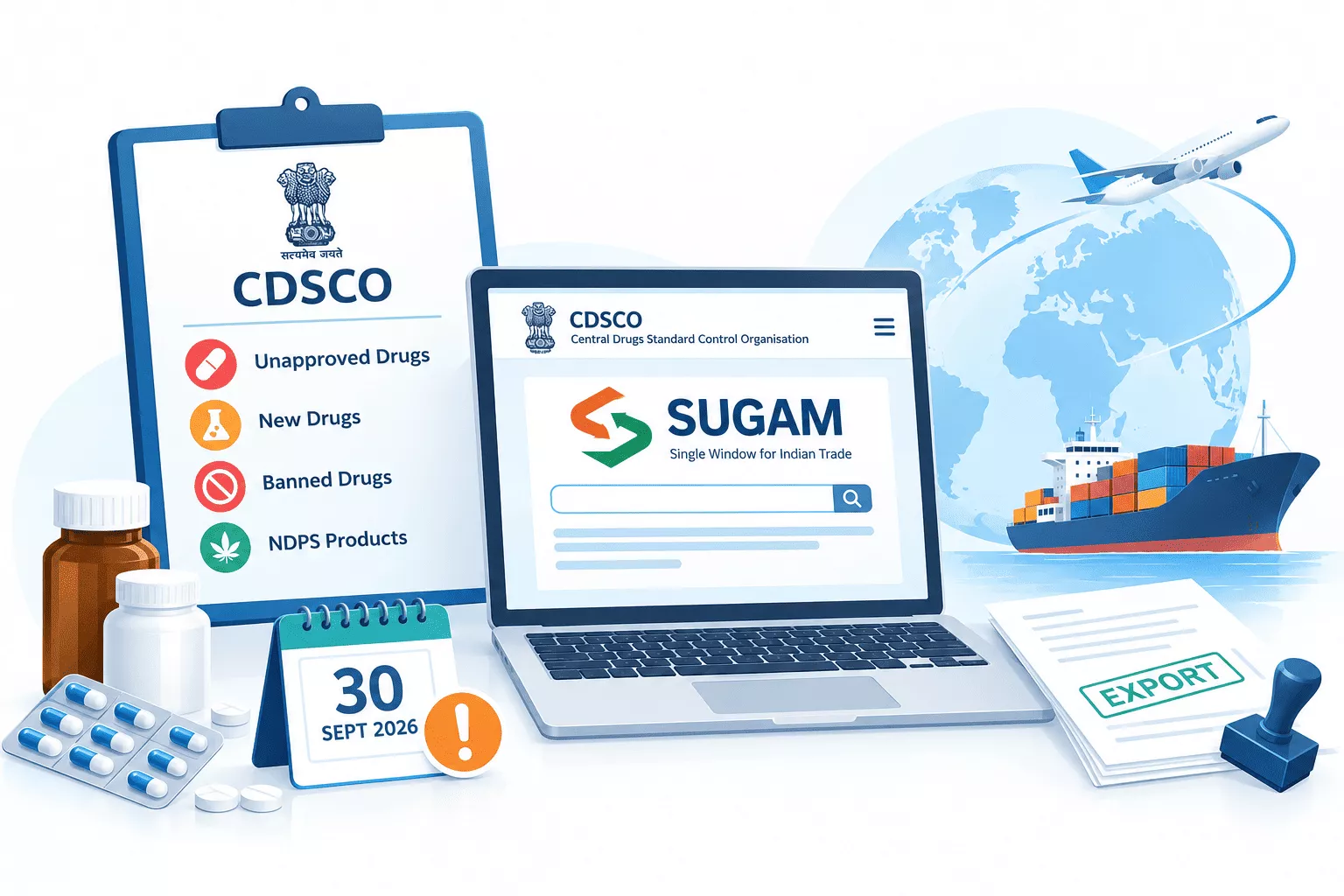
A CDSCO export NOC covers unapproved, new and banned drugs as well as NDPS products. Medicine export requirements in India have tightened quite a bit after 30 September 2026. So before you file for any licence or anything, always verify the latest rules on CDSCO’s SUGAM portal.
Step 5: Finalise Pricing, Contract and Payment Terms
The medicine export process from India happens on strict written terms.
- With FOB, the buyer pays freight from the Indian port.
- With CIF, you as an exporter cover freight and insurance.
Always remember that taking an advance before booking the shipment is the safest option. A letter of credit is again in the exporter’s interest. You also must scan the export incentive schemes before you price the medicines, because benefits change from time to time.
Step 6: Prepare the Pharma Export Documentation India Needs
| Document | Issued by | Purpose |
|---|---|---|
| IEC | DGFT | Export identity |
| RCMC | Pharmexcil | Recognised exporter status |
| Drug licence | State licensing authority | Legal manufacture |
| WHO-GMP/CoPP | Drug regulators | Quality proof |
| Free sale certificate | Drug regulators | Sale status in India |
| Certificate of analysis | Manufacturer | Batch quality |
| Commercial invoice | Exporter | Value and terms |
| Packing list | Exporter | Contents and weights |
| Shipping bill | Customs via ICEGATE | Export clearance |
| Bill of lading | Shipping line | Title and transport proof |
Avoid any mismatched names or dates between documents. This will save you from avoidable delays.
Step 7: Pack, Label and Ship Your Consignment
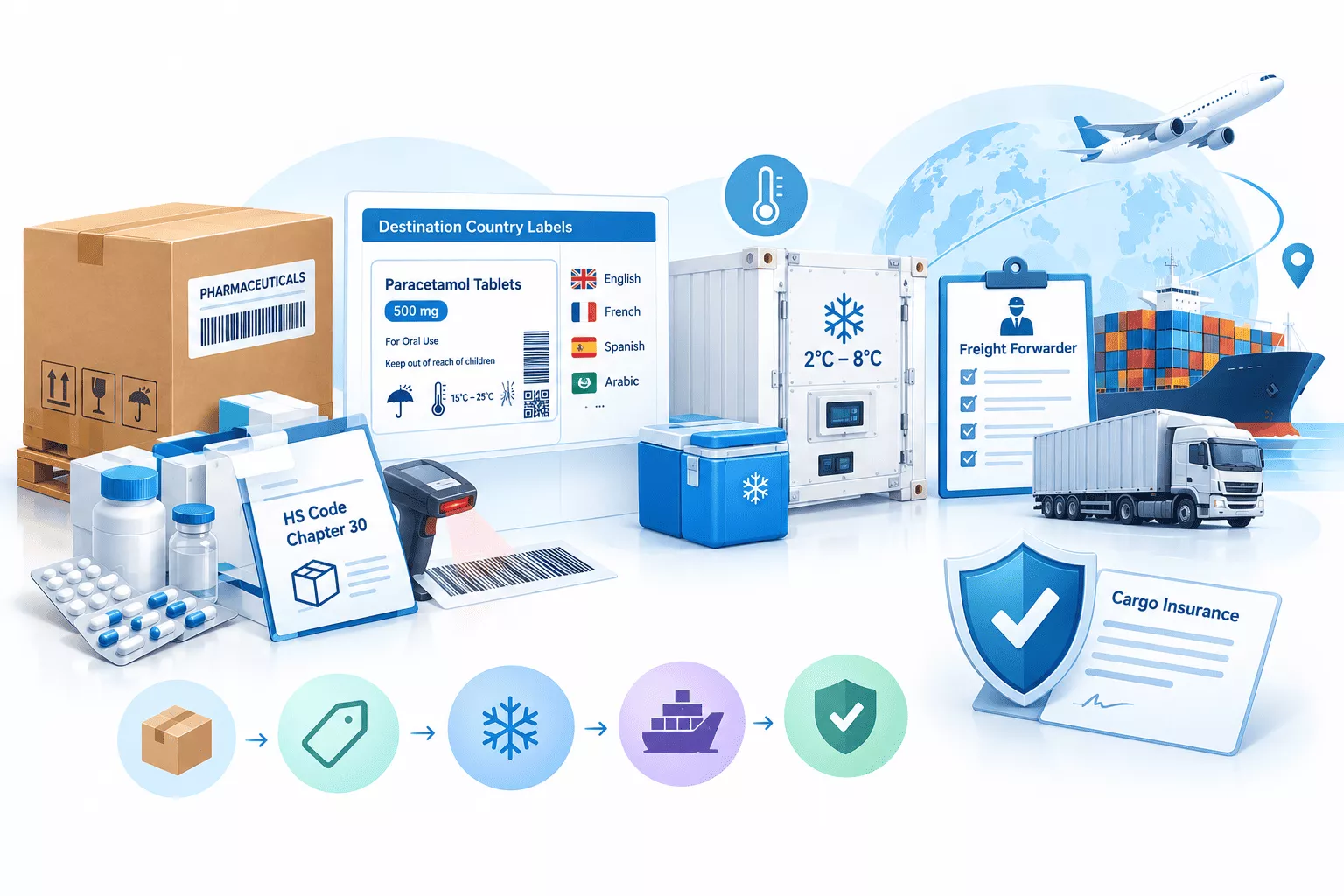
Every medicinal product has to be tagged under HS code Chapter 30. A wrong code will trigger unnecessary queries.
The medicine export process from India must have labels as per the destination country’s rules. At times it may also need to be in a specific language, if required or demanded.
For any medicine that is temperature-sensitive, you need to have a cold chain as well. So hire an experienced freight forwarder – such a person knows how to correctly dispatch pharma cargo. Insurance of the cargo is one step that should never be missed to save a few dollars. It can save the whole cargo price in any untoward situation.
Step 8: Customs Clearance and Payment Realisation
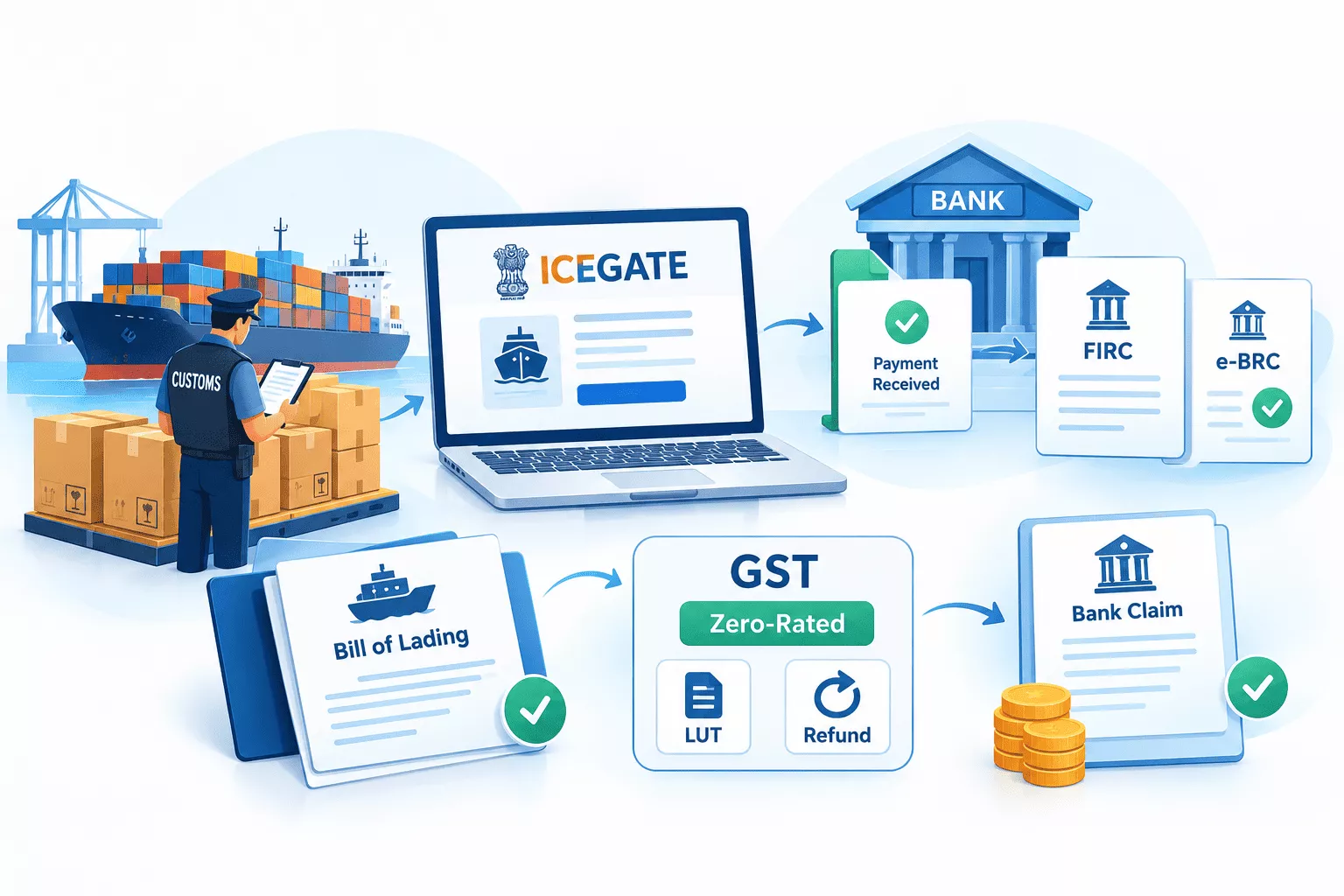
Your shipping bill has to be filed on ICEGATE for customs clearance. Customs will examine the consignment.
After the shipment’s payment arrives, you can collect the FIRC from your bank. After this, e-BRC for realisation happens. Exports can be zero-rated for GST, either under LUT or by claiming a refund. So you need to keep the bill of lading handy for banks to claim such a thing.
Blunders to Avoid When Exporting Medicines
Four errors cost exporters the most:
- A wrong HS code.
- Labels that do not match the registered dossier.
- Shipping before product registration is done in the buyer’s country.
- Weak payment terms set up with a new buyer.
Selecting a Reliable Pharmaceutical Exporter or Manufacturing Partner
For this you need to go back to basics:
- Is the plant WHO-GMP certified?
- Are licences valid and current?
- Demand an export track record in your target market.
- Check regulatory and dossier support.
- Finally, test batch consistency with a trial order.
A partner like Kashmik Formulation, who passes all five, protects your brand.
How Kashmik Formulation Supports Pharma Exporters
We support medicine exporters who want a dependable manufacturing partner. We help you not only create a globally valid contract, but also support you with third-party manufacturing. We create world-class medicines and you can export under your own brand. Our team also helps you simplify the procurement of licences, medicine registration and the pharma export documentation global buyers expect. In simple words, you focus on selling while we handle the medicine production and paperwork.
Talk to Us About Your First Shipment
Any more queries on how to export medicines from India without mistakes? Talk to us at Kashmik Formulation and start with your first shipment soon.