India’s pharmaceutical industry supplies medicines to over 200 countries. India accounts for about 20% of global generic medicine supply. Its manufacturing scale therefore carries enormous responsibility. Every batch must meet strict quality requirements. CDSCO regulates drug quality, safety and manufacturing standards. Manufacturing failures can trigger recalls, shortages and regulatory action. Even packaging errors can disrupt an otherwise compliant batch.
In 2026, Indian pharma faces growing quality scrutiny. That makes manufacturing controls a business-critical priority. So, what actually happens before medicine reaches you?
Step 1: Raw Material Sourcing Comes First
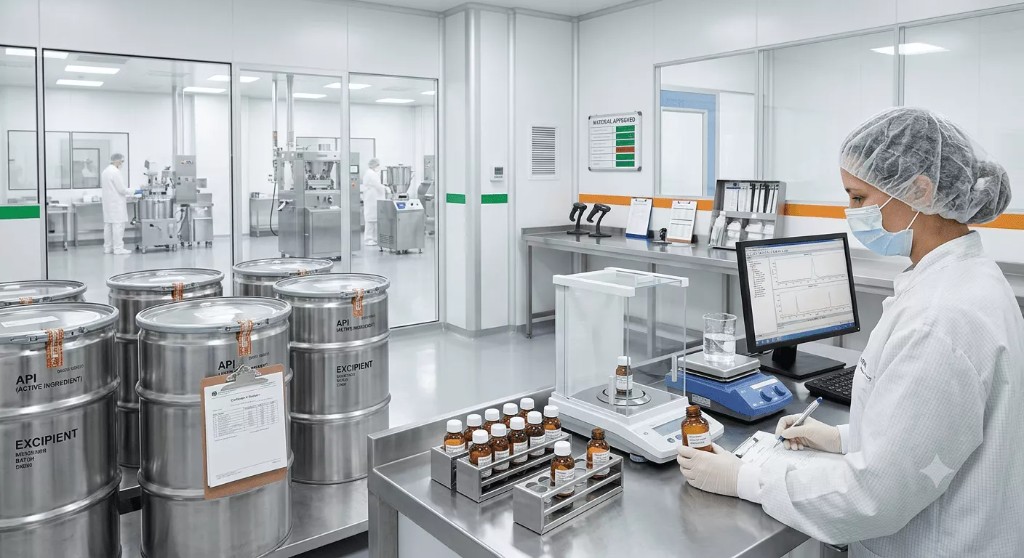
Most explanations of the drug manufacturing process from formulation to packaging start with formulation. That's a step too late, but it actually starts with raw material sourcing. And this is where contract manufacturing relationships quietly fail more often than anywhere else.
Every API and excipient batch needs a Certificate of Analysis and that certificate needs independent in-house re-verification. We've had a vendor-supplied CoA claim a purity level our own incoming QC testing didn't match on a rechecked excipient batch. Nothing shipped, but it pushed a full week's schedule for that line. That’s a proof that incoming testing is the first checkpoint every later stage depends on.
If a manufacturing partner isn't testing incoming raw materials independently of supplier paperwork, that's worth asking about directly.
Step 2: Formulation Design Decides Everything Downstream
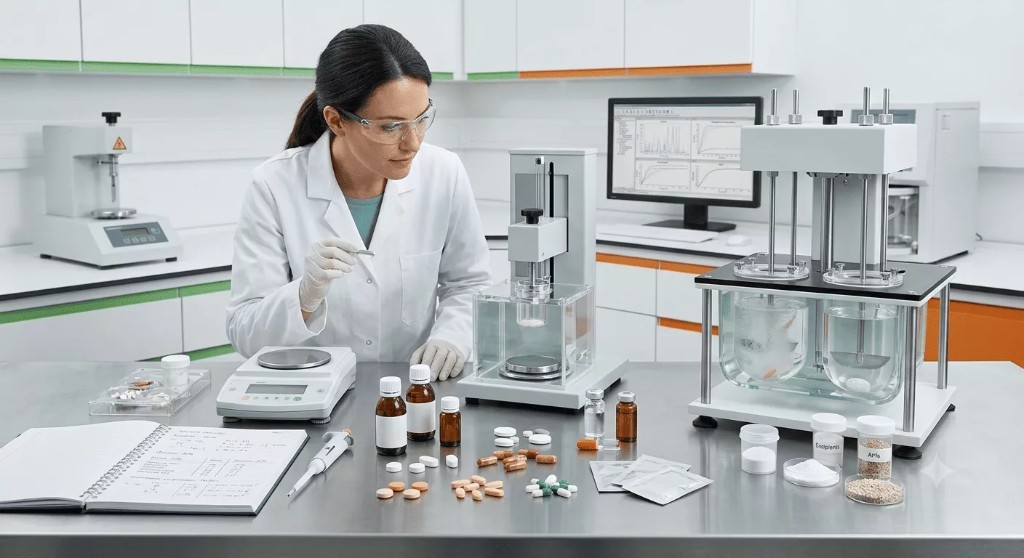
Formulation design is where a molecule becomes a usable dosage form (tablet, capsule, oral liquid, sachet). It is also where disintegration time, dissolution rate and bioavailability (how much active drug actually reaches the bloodstream) get decided.
Here's a common assumption that doesn't hold: a denser, harder tablet is a better one. It isn't. Over-bind it with excess excipient and disintegration time increases because it holds together on the shelf and refuses to break down once swallowed. We've reformulated batches specifically to reduce binder concentration because the original, while structurally perfect, was compromising dissolution. Hardness and quality aren't the same thing.
Step 3: Mixing and Granulation
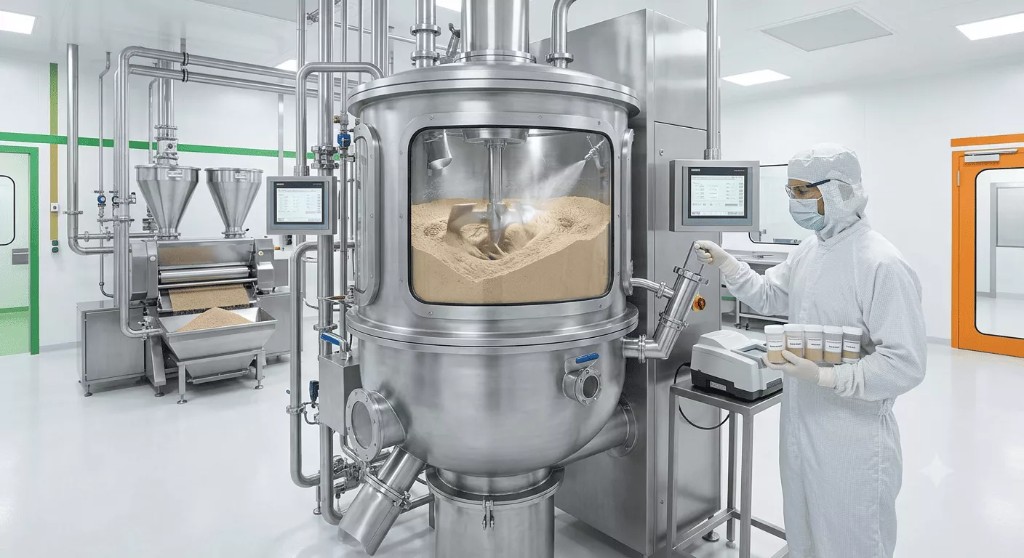
Once formulation design is locked, mixing and granulation begins. In pharma terms it means combining the API with excipients (fillers, binders, disintegrants) into a uniform blend. Poor mixing means uneven drug distribution, which means some tablets in a batch carry more active ingredients than others. It could be dosing inconsistency, not a cosmetic one and exactly what batch manufacturing records exist to catch.
Wet and dry granulation both have their place depending on an API's moisture sensitivity. This is a detail that forces a full reformulation cycle if picked wrong.
Step 4: Drying of the Formulations
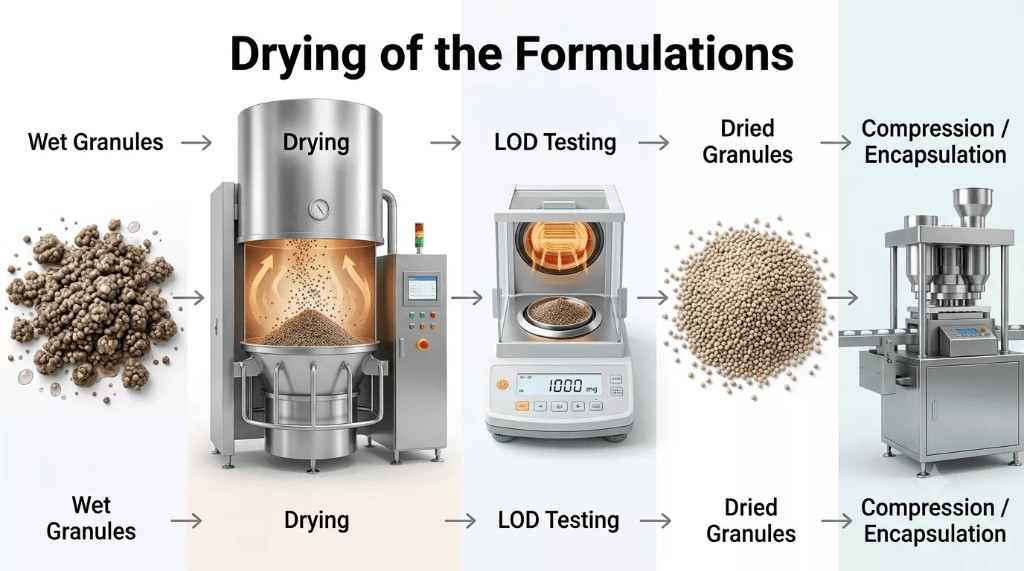
Post-granulation, moisture content has to come down to a validated range, typically checked via Loss on Drying (LOD) testing, before granules move to compression or encapsulation. Too much residual moisture and tablets go soft and capping-prone; too little and some formulations lose the binding they need. This step rarely gets attention in generic explanations of the pharmaceutical manufacturing process steps, but it's a hard checkpoint on every batch record, with LOD limits set at the formulation stage, not guessed at on the floor.
Step 5: Compression and Encapsulation
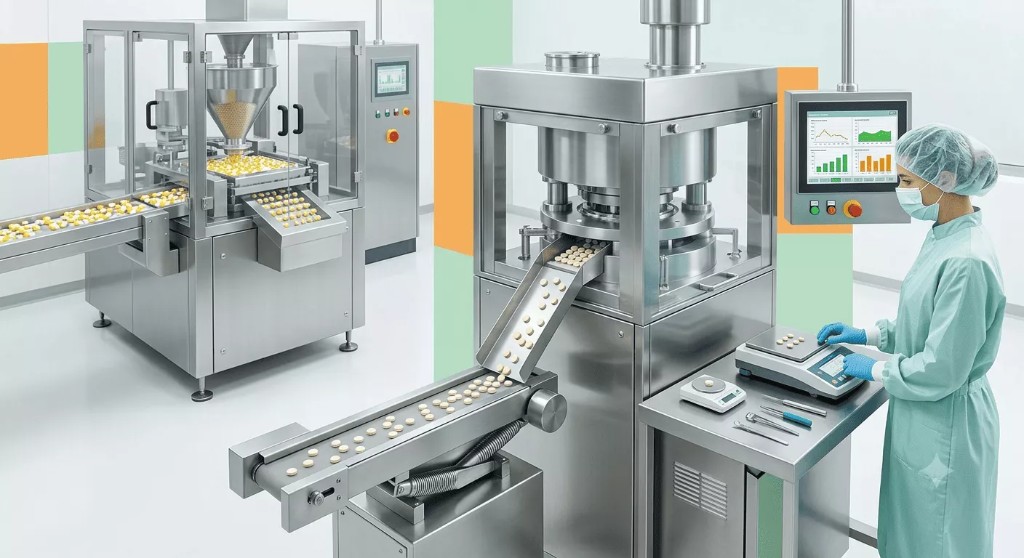
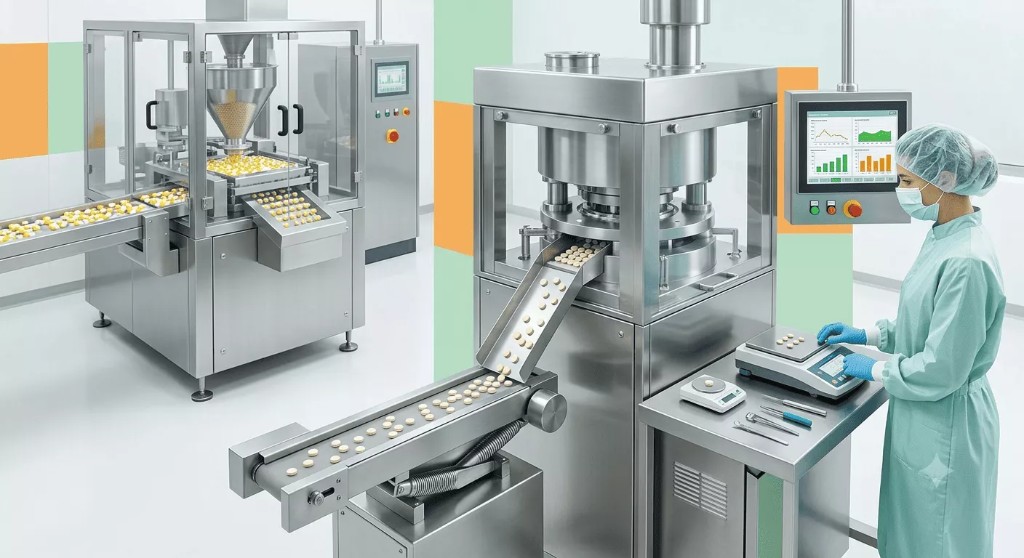
This is the stage people picture when they think about how medicines are manufactured. A rotary press stamping out thousands of tablets a minute or capsule-fillers dosing powder into shells. It's the core of the tablet manufacturing process: hardness, thickness, friability and weight variation all get monitored continuously.
Get the tablet manufacturing process wrong at this stage and no amount of downstream testing fully corrects it.
A press drifting slightly out of calibration can push weight variation outside spec gradually, batch after batch, without one dramatic failure. That’s why in-process checks run every 20–30 minutes on a LIVE line. Encapsulation carries a parallel set of checks: fill weight consistency and shell integrity.
Step 6: Tablet Coating
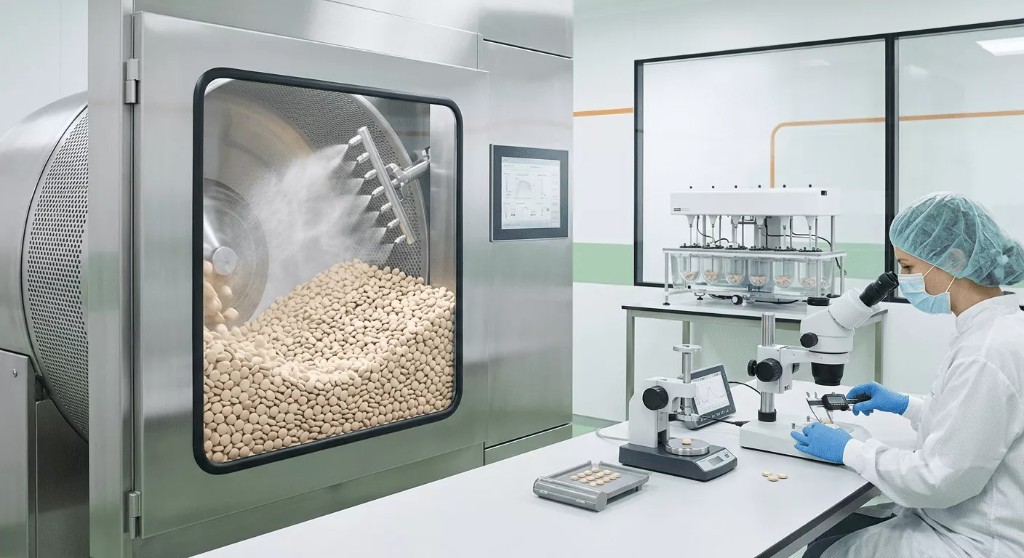
Not every tablet needs coating, but when it does (for taste masking, moisture protection or delayed release), then the tablet coating adds its own validation layer. Film thickness, weight gain percentage and post-coating dissolution all get re-tested. Coating applied even slightly too thick can alter release enough to affect bioavailability.
Coating is a formulation change, not a cosmetic finish. A critical step people rarely think about when they ask how medicines are manufactured at scale.
Step 7: Quality Control Testing and Stability Testing
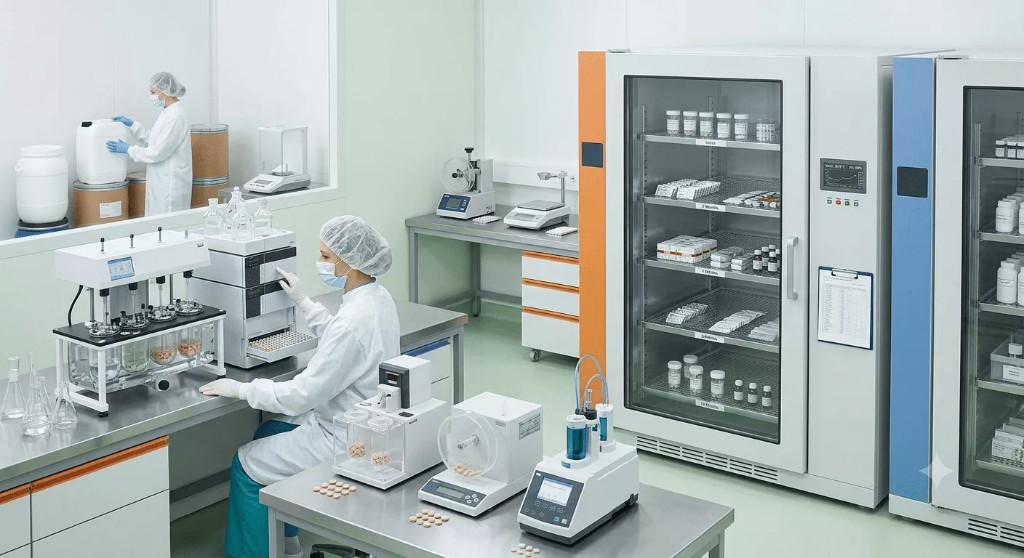
Quality control testing runs throughout the process. Incoming raw materials, in-process checks during compression. Finished-product testing happens across dissolution, assay, uniformity and microbial limits.
Stability testing is the part clients ask about least and should ask about most. Ask if storing samples at defined temperature and humidity (per ICH guidelines) over months, sometimes years will be safe? You must confirm the product still meets spec at the end of its claimed shelf life.
Step 8: Sterilization and Aseptic Filling
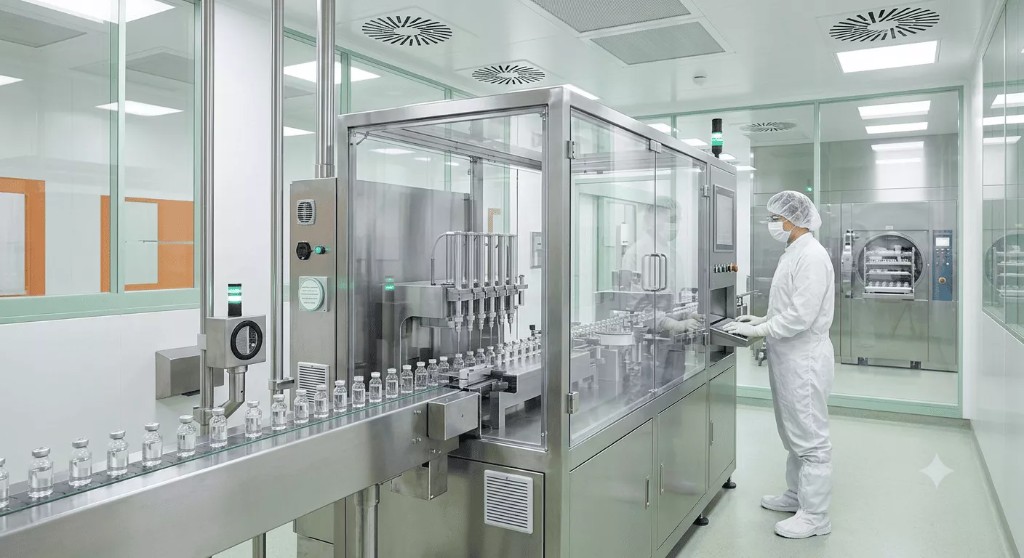
For sterile dosage forms (injectables, certain oral liquids) sterilization and aseptic filling introduce a different risk entirely: microbial contamination. These run under stricter environmental controls than solid dosage work. That too with continuous monitoring of the filling area itself.
Step 9: Packaging and Labelling
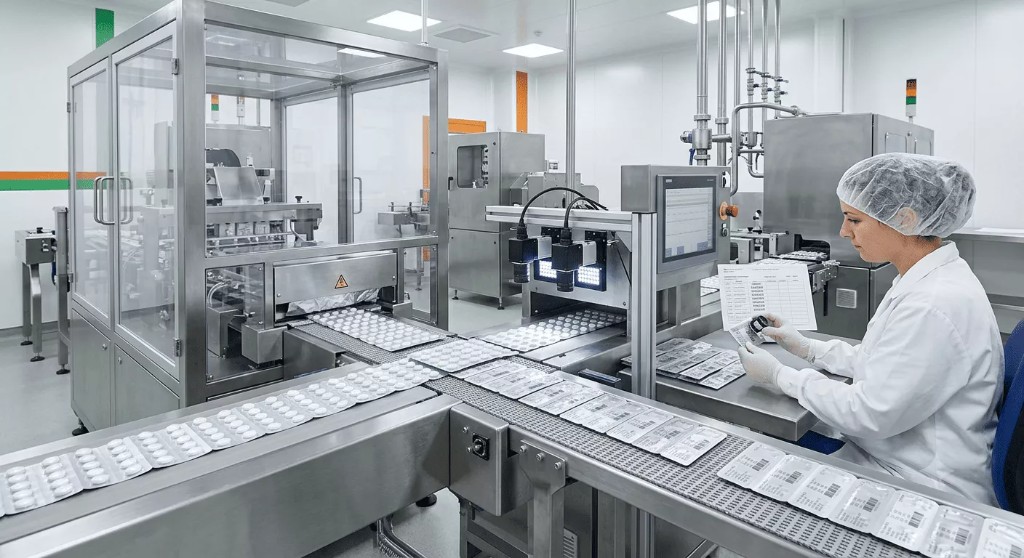
Blister packing protects tablets from moisture, light and damage. It's also a regulatory checkpoint with batch number, manufacturing date, expiry date and MRP all verified against the batch record before a strip leaves the line.
Packaging and labelling errors are entirely preventable. And they are still one of the most common reasons for product recalls industry-wide.
Step 10: GMP Compliance is Critical Stage and Not Merely a Certificate
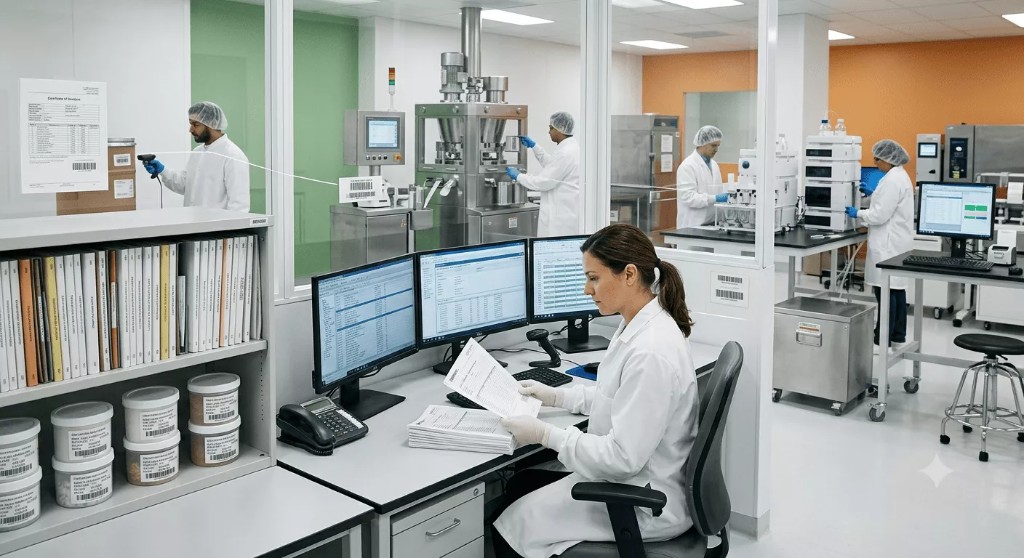
GMP compliance gets treated in a lot of sales conversations as one checkbox: WHO-GMP certified, done. It isn't. It's every stage above being documented, tested and traceable, from the raw material CoA re-check to stability chamber logs pulled eighteen months after a batch shipped.
Learn more about WHO-GMP certification when you evaluate a manufacturing partner — ask for documentation of every stage above, not just the certificate itself.
Step 11: Batch vs. Continuous Manufacturing
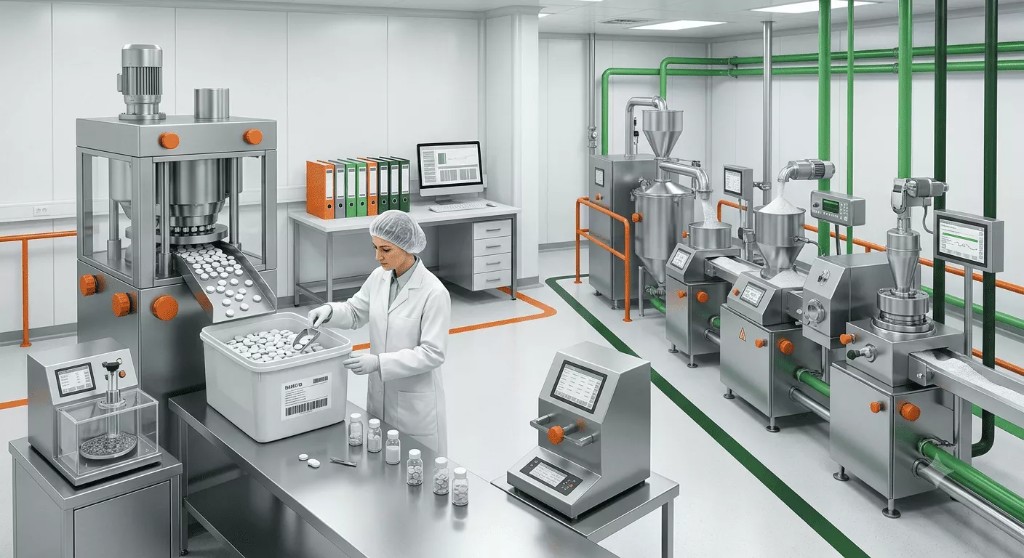
Most facilities, including ours, run batch manufacturing — fixed-size batches, each with its own record, tested and released independently. Continuous manufacturing, still uncommon in India at scale, processes material in an unbroken flow instead. It has real advantages for the right product, but batch manufacturing stays the standard for solid oral dosage work here, because it gives a discrete, fully traceable unit to test and release.
A weak manufacturing process can trigger quality investigations, production interruptions, regulatory scrutiny and ultimately, medicine shortages. Ask your partner how each of the eleven stages above is documented and released — not just whether they hold a WHO-GMP certificate.
Connect With the Right & Certified Manufacturing Partner
At Kashmik Formulation, this is the medicine manufacturing process we run daily across our 60,000 sq. ft. WHO-GMP certified facility in Ahmedabad. We manufacture tablets, capsules, oral liquids and powders, at a scale of roughly 1 crore tablets, 9 lakh capsules and 1 lakh sachets a day.
Kashmik Formulation runs this full medicine manufacturing process under WHO-GMP compliance. Connect with us if you have any more queries or doubts — or get in touch.