Every year, many new pharma brands launch their products. BUT did you know they do not own a single manufacturing plant? So how do they do it? They trust a manufacturing partner.
In India, people use these two terms as the same - third-party manufacturing and private label manufacturing. But they do not mean the same thing!
Today we will show you the detailed difference between third-party manufacturing vs private label manufacturing. It will help you select the right model for your business.
What Is Third-Party Manufacturing?

Here a brand outsources pharma production to a licensed unit. The brand owner supplies or approves the formulation as well as the composition, packaging, labels etc. The manufacturer then produces medical batches at its own production site.
This is also called contract manufacturing. The contract partner produces the medicines while the parent company sells them under their own name.
What Is Private Label Manufacturing?
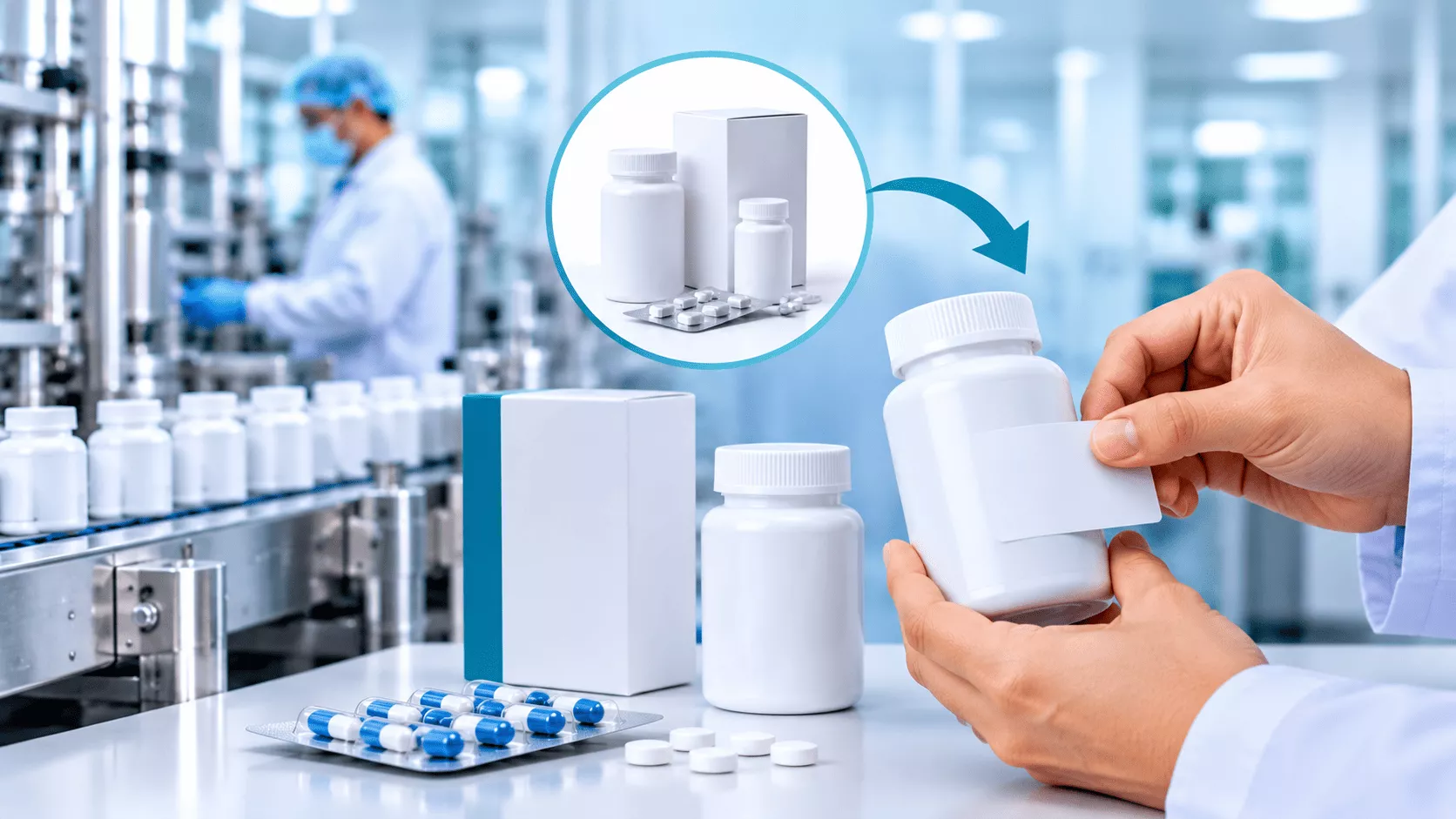
Private label pharma manufacturing means a manufacturer supplies a ready-made formulation. And you sell it under your own brand name. Some people call this white label manufacturing. Production is already done. The benefits? A faster launch, less development effort and a lower minimum order quantity (MOQ).
So what is the trade-off? It is complete control. The proprietary product creation formula stays with the manufacturer. He can sell the same product under different names to other brands. You select the brand name, label and pack, but the chemical formula stays with the parent manufacturer.
This type of deal is good for businesses that want to test the market. Here comes handy a proven generic formulation. You can pick any from a ready-made range of tablets, capsules, syrups or ointments.
Third-Party vs Private Label Manufacturing: Key Differences
| Factor | Third-Party | Private Label |
|---|---|---|
| Formulation ownership | Usually with the brand | Stays with the manufacturer |
| Customisation | Own composition, pack and artwork | Brand name, label and pack only |
| Launch speed | Slower; needs development and stability checks | Faster; products already exist |
| Smallest order size | Often higher, set per product | Often lower on existing products |
| Cost | Higher upfront for custom work | Lower upfront; no development cost |
| Exclusivity | Possible if agreed in the contract | Rarely exclusive |
| Regulatory responsibility | Shared; brand supplies specifications | Shared; manufacturer holds existing approvals |
| Best suited for | Own concept or distinct specification | Quick launch from an existing range |
Which one to go for? Match the model to your product plan, budget and timeline.
Licences and Legal Responsibility: Who Is Accountable?

The Drugs and Cosmetics Rules, 1945 recognise licence types. They do not care about the commercial labels, third-party or private label. Three types matter.
- An own manufacturing licence (Form 25/28) that covers a company’s own plant.
- A loan licence (Form 25A/28A) lets a licensee use another licensed facility. The reason why loan licence manufacturing in India is quite popular with pharma start-ups.
- A repacking licence covers finished drugs. Both sides carry compliance duties. But pharma plants must follow Schedule M. The label must have the manufacturing site complete details.
Many deals are principal-to-principal (P2P). Rules change from time to time. So before you sign a deal, verify them on the CDSCO portal. Also verify them with your state drug licensing authority.
Cost, MOQ and Timelines: What to Expect
Costs depend on the product.
A customised formulation will require development and stability work. Ready formulas skip that step. Thus, private label pharma manufacturing is often cheaper to begin the business.
Custom batches usually need larger orders. Ready pharma products allow smaller trial runs. Printed cartons and labels add labelling and packaging costs. For third-party manufacturing pharma India projects, loan licence manufacturing in India helps cut fixed costs, as you need no manufacturing plant. A batch-ready launch may take only a few weeks while the custom product will need several months. These are not fixed rates for any, so you must demand a written quotation for every single product including the taxes.
Which Model Is Right for Your Business?
Your answer depends on budget, timeline and control over the product you seek.
- If you want a quick launch from an existing range, choose a private label.
- But in case you have your own concept or a distinct specification, select a third-party.
Select from these 3 scenarios.
A new PCD pharma franchise may want ten proven products very fast: private label manufacturing will suit you.
A marketer wants a unique tablet strength and pack: third-party manufacturing fits the deal.
An exporter needs a product dossier and export registration support: either model can work. But you need to verify that your partner in India can supply both legally.
Pharma Manufacturing Partnerships - Key Mistakes to Avoid
Silly yet costly blunders can be prevented by understanding the difference between third-party manufacturing and private labels. A small oversight now can become a costly dispute later.
Watch for these steps:
- Never assume the two terms mean the same thing.
- Always have a written quality agreement.
- Have a very clear formula, trademark and label ownership deal.
- Check licence validity, even in loan licence manufacturing in India.
- Never make a selection on a cheap cost; consider the quality, the order size, the date of manufacturing etc.
How to Select a Reliable Manufacturing Partner

A reliable partner will share this information openly and answer your questions.
Check these points before you sign:
- Valid licences and current GMP certification.
- Batch-to-batch consistency.
- An in-house quality control laboratory.
- Documents: batch manufacturing record, COA (certificate of analysis) and stability data.
- Dossier and regulatory support.
- Clear confidentiality terms.
How Kashmik Formulation Supports Brand Owners
Kashmik Formulation supports start-ups, distributors and exporters. We offer both the third-party manufacturing pharma India services and private label pharma manufacturing.
The aim is simple: reliable excellent quality batches, clear legal documents and honest communication. Whether you need a ready range or a custom product, you can connect with us. Our team will discuss licences, packaging, order size and timelines before you commit.
Still Have Doubts on Selecting the Right Manufacturing Model?
Come to us, we will help you choose based on control, speed and budget. Contact Kashmik Formulation to discuss your product range and requirements. We will share the quote.